
Duc Toan Truong, Yohandys A. Zulueta, My Phuong Pham-Ho, An-Giang Nguyen, Chi M. Phan and Minh Tho Nguyen*
2026
RSC Advances
ACS Omega
Duc Toan Truong, Nguyen Minh Tam, Chinh Tam Thai, Thi Mai Dung Do, Chi M. Phan, Viet Bac T. Phung*
RSC Advances
2025
RSC Advances
PCCP
Duc Toan Truong, Kiet Ho, Chinh Tam Thai, Dung Do Thi Mai, Nguyen Minh Tam, Viet Bac T. Phung and Minh Tho Nguyen
Dalton Transactions
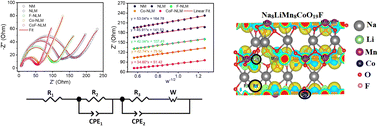
Unraveling the electronic mechanisms of transition metal and fluorine co-doping for enhanced electrochemical performance in sodium lithium manganese oxide cathodes
Duong Trong Nhan, Nguyen Vo Anh Duy, Nguyen Chi Ben,Duy Khanh Nguyen, Yohandys A. Zulueta, Nguyen To Van, Viet Bac Thi Phung, Nguyen Van Nghia, Minh Tho Nguyen and Minh Triet Dang*
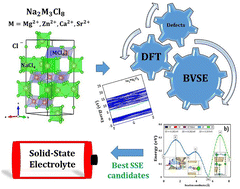
Remarkable properties of Na2M3Cl8 compounds (M = Mg, Zn, Ca, and Sr) as solid-state electrolytes: a theoretical study
Yohandys A. Zulueta, Duy-Quang T. Nguyen, Minh Tho Nguyen and My Phuong Pham-Ho
2025 - PCCP
Abstract
Advanced atomistic computations have been applied to investigate the structural, electronic, and transport properties of the unexplored chloride compounds Na2M3Cl8 with M = Mg, Zn, Ca, and Sr. Lattice parameters computed using density functional theory and force field methods closely match reported values, particularly when compared to experimental values of Na2Mg3Cl8. Electronic structure analysis confirms that Na2M3Cl8 exhibits semiconductor characteristics with a large energy gap of ∼5 eV, except for Na2Zn3Cl8, which results from a hybridization of [NaCl] trigonal prismatic and [MCl2] octahedral components. Defect energetics computations reveal that NaCl Schottky defects are the predominant defect type, characterized by low formation energy, which promotes sodium vacancy formation and extensive Na-ion migration. Notably, Na2Ca3Cl8 and Na2Sr3Cl8 contain the lowest NaCl Schottky defect energies, making them candidates for efficient Na-ion transport. These compounds exhibit excellent conductivity properties, with activation energies as low as 0.20 eV for Na2Ca3Cl8 and 0.15 eV for Na2Sr3Cl8, along with outstanding room-temperature conductivities of 3.78 mS cm−1 and 3.29 mS cm−1, respectively, comparable to leading superionic solid-state electrolytes. This study extends prior work on Na–Mg–Cl systems by revealing how divalent cation substitution (Ca, Sr, Zn) modulates defect energetics, octahedral distortion, migration pathways, and uncovering non-monotonic trends that deepen the understanding of structure–transport relationships in halide SSEs. Given these remarkable theoretical findings, experimental validation is crucial to assess the stability and practical applicability of Na2M3Cl8 compounds, particularly Na2Ca3Cl8 and Na2Sr3Cl8, for their integration into next-generation Na-ion battery technology.
2025
Vietnam Journal of Chemistry
This brief review introduces the unique structural motifs of several small gold-based clusters, then followed by a profound analysis of their binding mechanism with two typical antitumor drugs. At the equilibrium point, both Au17 and Au18 species are found to prefer the star-like forms that have never been located for both gold and other transition metal clusters. Although the pure gold cluster tends to exist under a flat-cage shape, a tube-like shape composed of three Au5 rings encapsulated with an M2 unit inside has been identified as the global energy minima for the doubly doped counterparts
A brief review on gold nanoclusters: Beautiful structures and practical aspects
This brief review introduces the unique structural motifs of several small gold-based clusters, then followed by a profound analysis of their binding mechanism with two typical antitumor drugs. At the equilibrium point, both Au17 and Au18 species are found to prefer the star-like forms that have never been located for both gold and other transition metal clusters. Although the pure gold cluster tends to exist under a flat-cage shape, a tube-like shape composed of three Au5 rings encapsulated with an M2 unit inside has been identified as the global energy minima for the doubly doped counterparts  (M = Mo, W). Then, we present a thorough analysis on the molecular interaction between the tetrahedral Au20 cluster and two anti-tumor drug molecules, that is mercaptopurine and pramipexole. Internal triggering elements including the presence of amino acids like cysteine residues and low pH of cancerous tissues that induce the drug releasing will be discussed in the last section.
New Journal of Chemistry
From Atomic Structure to Functional Properties: Orthorhombic Disphenoidal NaAlBr4 as a Solid-State Electrolyte
This paper presents a comprehensive computational investigation of the orthorhombic P212121 phase of NaAlBr4 as a halide-based solid-state electrolyte for sodium-ion batteries. Symmetry lowering from the conventional Pnma phase generates one-dimensional Na⁺ conduction ribbons along the b-axis, enabling highly directional transport. Thermodynamic stability, confirmed through computed decomposition energies, global instability index values, and convex-hull analysis, demonstrates its strong bonding, resistance to elemental breakdown and intrinsic synthesizability. Mechanical analysis reveals moderate elastic anisotropy and high compressibility, supporting interface compatibility. Electronic structure calculations show a wide band gap (4.3-4.7 eV) which corresponds to an electrochemical stability window of 0-4.5 V, ensuring an insulating behaviour and a compatibility with Na metal anodes and high-voltage cathodes. Defect energetics identify NaBr Schottky and Na+ Frenkel defects as the most favourable intrinsic configurations, while Li+ substitution and divalent doping with Zn2+ and Mg2+ at Na+ sites further promote vacancy formation. Transport analysis, evaluated by bond valence computations, yields exceptionally low migration barriers (~0.10 eV) and room-temperature conductivities up to 0.11 S/cm. Although the orthorhombic P212121 phase of NaAlBr4 has not been observed experimentally yet, these results predict the P212121 phase of NaAlBr4 as a symmetry-enabled, defect-tunable halide electrolyte, advancing design strategies for next-generation sodium-ion batteries.
Journal of Physics and Chemistry of Solids
Divalent ion exchange in Na2MgCl4 double chloride enabling new effective solid-state electrolytes for sodium ion batteries
The search for new solid-state electrolytes for sodium-ion batteries is essential to enhance energy storage performance and stability. This study explores the potential of Na2MCl4 (M2+ = Mg2+, Zn2+, Ca2+ and Sr2+) as battery materials using advanced atomistic simulations. Structural analysis reveals that Na2SrCl4 has the largest unit cell due to its larger cationic radius, followed by Na2CaCl4, both introducing subtle octahedral distortions. Energy gap trends highlight the impact of cation selection on electronic properties, while polyhedral volume variations influence lattice stability. Defect analysis confirms the NaCl Schottky defect as the most favourable, with decreasing solution energy as the cation size increases, reinforcing ambient stability. Na2ZnCl4 emerges as the most stable compound based on defect formation energies. Mechanical properties show a decrease of both bulk and shear modulus with respect to an increase of cation size, where most compounds meet the shear modulus threshold for dendrite suppression, except for Na2SrCl4. Pugh’s ratio confirms their ductile nature, supporting their viability as solid-state electrolytes. Transport property evaluations reveal that smaller cations such as Mg2+ and Zn2+ enhance Na+ mobility by reducing activation barriers and improving ionic conductivity. Specifically, Na2MgCl4 exhibits the lowest activation energy for conductivity at 0.17 eV, while Na2ZnCl4 shows the highest conductivity at 0.215 mScm−1, reinforcing their efficiency for Na+ transport. Optimizations of lattice interactions can further enhance the sodium ion diffusion, making these materials strong candidates for solid-state battery applications.
2024
Zulueta, Y. A.; Pham-Ho, M. P.; Nguyen, M. T. J. Phys. Chem. Solids 2024, 188, 111916.
Assessing the feasibility of Na6MgCl8 as a material for all-solid-state sodium ion batteries: A theoretical approach
The search of outstanding materials used in sodium-ion batteries has to solve the two main challenges concerning the interfacial resistance between the solid-state electrolyte with the electrodes and relative high dc-conductivity at operative temperatures. In this work advanced atomistic simulations are used to evaluate the main properties of Na6MgCl8 rocksalt structure as a battery material for Na-ion Batteries. The results show that Na6MgCl8 has an insulating characteristic with an energy gap of ∼5.1 eV and is mechanically stable, ductile, and compatible with many possible electrodes/electrolytes. The simulations also predict that Zn2+ is the best divalent dopant, improving the defect characteristics and transport properties of Na6MgCl8. Large-scale molecular dynamics simulations show that Ba2+ and Zn2+ doping improve the Na ion transport, with a predicted Na conductivity of ∼10−7 Scm−1 at room temperature. Overall, these results suggest that Na6MgCl8 can be considered as a promising material for use in Na-ion batteries and further experimental confirmation is needed to verify these predictions.
Duong, L. Van; Le, C.-N.; Nguyen, D. Q. T.; Nguyen, M. T.; Pham-Ho, M. P. Int. J. Hydrogen Energy 2024, 57, 1486–1497.
A theoretical study of the Li5B3Six(BH)3-x isolobal systems with x = 0–3: Remarkable materials for H2 adsorption
In this study we investigate the stability of the isomers of the LinB3Si3 clusters with n = 0–7 using both density functional theory and coupled-cluster theory CCSD(T) calculations using both the def2-TZVPP and def2-QZVPP basis sets and the total energy is subsequently extrapolated to the complete basis set limit (CBS). Calculated results reveal closely spaced energies among the four most stable isomers for each size, except for n = 5. The Li5B3Si3 isomers exhibit significant energy gaps, and a high thermodynamic stability as suggested by ΔE and Δ2E values for its lowest-energy isomer. Of particular importance, Li5B3Si3 emerges as a material able to capture a large amount of molecular hydrogen. To enhance the wt%, a substitution of Si atom by a BH unit tends to yield stabilized compounds Li5B3Si2(BH), Li5B3Si(BH)2 and Li5B3(BH)3. Molecular dynamics simulations (BOMD) at up to 1200K confirm their thermal stability. Magnetic ring current maps identify them as doubly aromatic species, explaining their high stability. Each of these four Li5 compounds can adsorb up to 24H2 molecules with adsorption energies of 0.1–0.2 eV. The Li5B3(BH)3 shows the most favorable wt% improvement as compared to the previously known B12Li8 cluster. A survey shows that all clusters can adsorb 24H2 at pressures up to 100 atm and temperatures below 80 K, fitting the effective range for cryo-compressed hydrogen storage.
Truong, D. T.; Ho, K.; Nguyen, M. T. Chem. Phys. Lett. 2024, 840.
The Jarzynski binding free energy can effectively rank ligand-protein affinities in inadequate samplings
The use of the Jarzynski equality for estimating ligand–protein binding free energies are illustrated for cases of inadequate samplings. Data obtained from a large amount (104) of work are thus converged to an incorrect value, due to creation of a distorted Gaussian-like distribution. However, even in such cases, the Jarzynski equality can effectively rank binding affinities in the early stage of rational drug design. A combination of steered molecular dynamics calculations, Jarzynski relation and block averaging can provide such relative binding free energies having significantly better correlations in the cases of the thrombin and HIV-1 complexes examined.
2022
L. Van Duong, M. T. Nguyen, and Y. A. Zulueta, “Unravelling the alkali transport properties in nanocrystalline A 3 OX (A = Li, Na, X = Cl, Br) solid state electrolytes. A theoretical prediction,” RSC Adv., vol. 12, no. 31, pp. 20029–20036, 2022
https://pubs.rsc.org/en/content/articlelanding/2022/RA/D2RA03370D
Transport properties of the halogeno-alkali oxides A3OX (A = Li, Na, X = Cl, Br) nanocrystalline samples with the presence of ∑3(111) grain boundaries were computed using large-scale molecular dynamic simulations. Results on the diffusion/conduction process show that these nanocrystalline samples are characterized with higher activation energies as compared to previous theoretical studies, but closer to experiment. Such a performance can be attributed to the larger atomic density at the ∑3(111) grain boundary regions within the nanocrystals. Despite a minor deterioration of transport properties of the mixed cation Li2NaOX and Na2LiOX samples, these halogeno-alkali oxides can also be considered as good inorganic solid electrolytes in both Li- and Na-ion batteries.
H. T. Nguyen, N. T. Cuong, N. T. Lan, N. T. Tung, M. T. Nguyen, and N. M. Tam, “First-row transition metal doped germanium clusters Ge16M: some remarkable superhalogens,” RSC Adv., vol. 12, no. 21, pp. 13487–13499, 2022
https://pubs.rsc.org/en/content/articlelanding/2022/RA/D1RA08527A
A theoretical study of geometric and electronic structures, stability and magnetic properties of both neutral and anionic Ge16M0/− clusters with M being a first-row 3d transition metal atom, is performed using quantum chemical approaches. Both the isoelectronic Ge16Sc− anion and neutral Ge16Ti that have a perfect Frank–Kasper tetrahedral Td shape and an electron shell filled with 68 valence electrons, emerge as magic clusters with an enhanced thermodynamic stability. The latter can be rationalized by the simple Jellium model. Geometric distortions from the Frank–Kasper tetrahedron of Ge16M having more or less than 68 valence electrons can be understood by a Jahn–Teller effect. Remarkably, DFT calculations reveal that both neutral Ge16Sc and Ge16Cu can be considered as superhalogens as their electron affinities (≥3.6 eV) exceed the value of the halogen atoms and even that of icosahedral Al13. A detailed view of the magnetic behavior of Ge16M0/− clusters shows that the magnetic moments of the atomic metals remain large even when they are quenched upon doping. When M goes from Sc to Zn, the total spin magnetic moment of Ge16M0/− increases steadily and reaches the maximum value of 3 μB with M = Mn before decreasing towards the end of the first-row 3d block metals. Furthermore, the IR spectra of some tetrahedral Ge16M are also predicted.